By Will Reaume
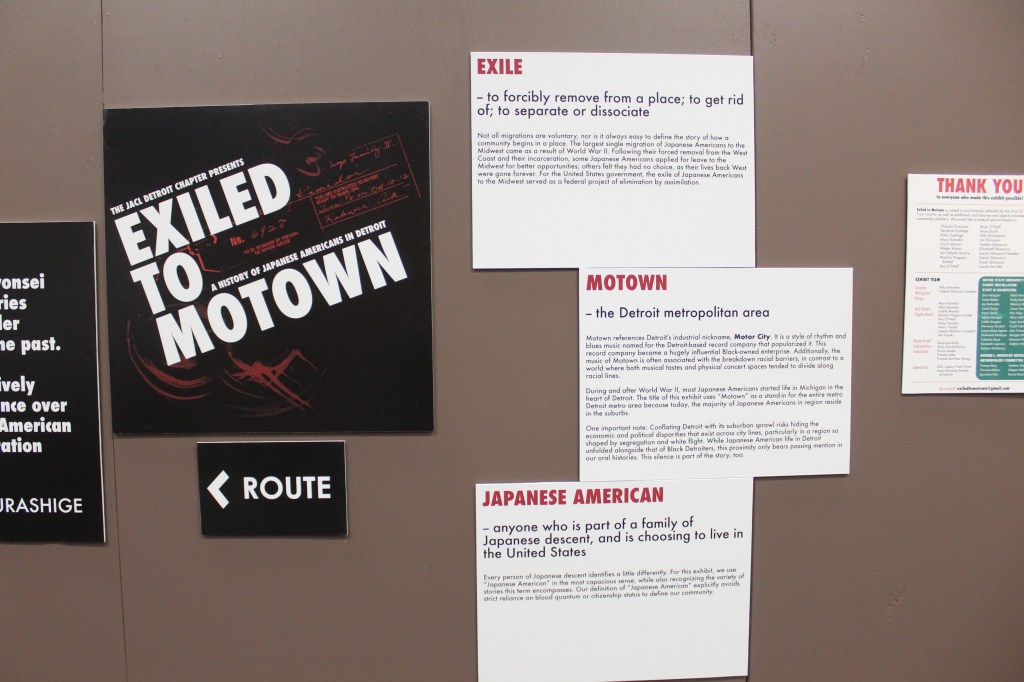
Despite a history dating back as far as 1892, the Japanese American community has not often received the recognition they deserve. From internment camps to their work on the Ford assembly lines, the Exiled to Motown exhibit, hosted by the Gordon L. Grosscup Museum of Anthropology, offers a glimpse into the impact Japanese Americans have in Detroit.
Based on the “Exiled to Motown” book published in 2015 by the Japanese American Citizens League (JACL), the exhibit first came to the Detroit Historical Museum in 2021. Due to its popularity, it returned Oct. 18 to the Grosscup Museum, and will run until Jan. 31. Exhibit times and days of operation can be found on Wayne State’s events calendar.
Started in 2019 by the JACL Detroit Chapter, this traveling exhibit seeks to tell the stories of the Japanese American community in Detroit and shine a light on their history. The exhibit is broken up into three sections: Coming to Detroit, Working in Detroit, and Making Detroit Home. Each section displays the unique characteristics and experiences that came with this process of settling in Detroit.
Coming to Detroit
Coming to Detroit focuses on the migration to the city and the discrimination and anti-Japanese sentiments they experienced. With an influx of Japanese Americans moving from the west coast after their imprisonment in internment camps, many of them found refuge in Detroit. The section also explores the ways in which Japanese American citizens found work in the city, many gaining employment on the Ford assembly lines.
Working in Detroit
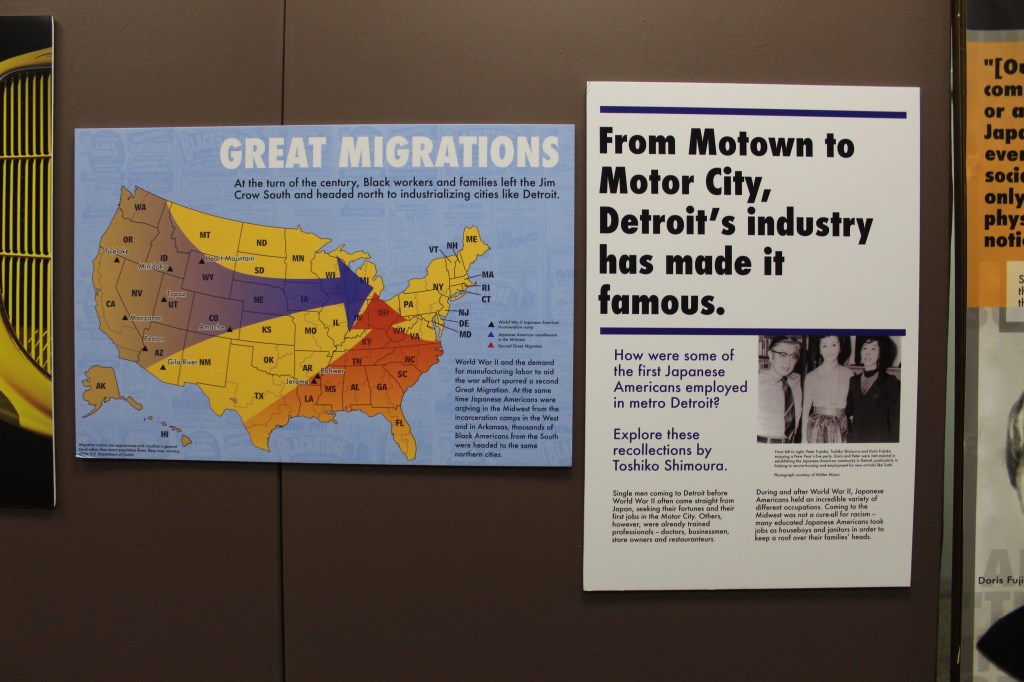
Working in Detroit goes in depth into the ways Japanese Americans earned a living and highlights the struggles they faced. This section features the descriptions of working conditions by Toshiko Shimoura, an MSU graduate and Detroit resident. She described the desperation many Japanese American men faced in trying to find employment, leading some to take jobs as houseboys or janitors. Taro Yamasaki, a Pulitzer Prize winning photographer for the Detroit Free Press, is also showcased for his contributions to the journalism world. His work titled, “Jackson Prison: Armed and Dangerous”, earned him the prestigious award in 1981.

Making Detroit Home
Making Detroit Home offers a detailed timeline that allows visitors to see the progression of Japanese Americans alongside other historical events at the same time. This offers perspective on the journey they have traveled to create the prosperous community that exists today. It also shows the ways in which Japanese Americans made Detroit uniquely their own and how they have continued to retain their traditions and values. The history of Japanese Americans is one of both resilience and oppression, and this portion of the exhibit exposes many of the ugly conditions they faced following World War II.

Lily LaMadline, a Detroit resident, found out about the exhibit through the museum’s Facebook page. She admitted she didn’t know much about Detroit’s Japanese American community, but after seeing the exhibit she feels much more familiar with it.
For those looking to find out more about the exhibit or the JACL, their website offers information on it as well as ways to support the organization.
 Reaume Writes
Leave a comment